
Share Burven Lee Bossie's obituary with others.
Invite friends and family to read the obituary and add memories.
Stay updated
We'll notify you when service details or new memories are added.
You're now following this obituary
We'll email you when there are updates.
Select your format and elements to print

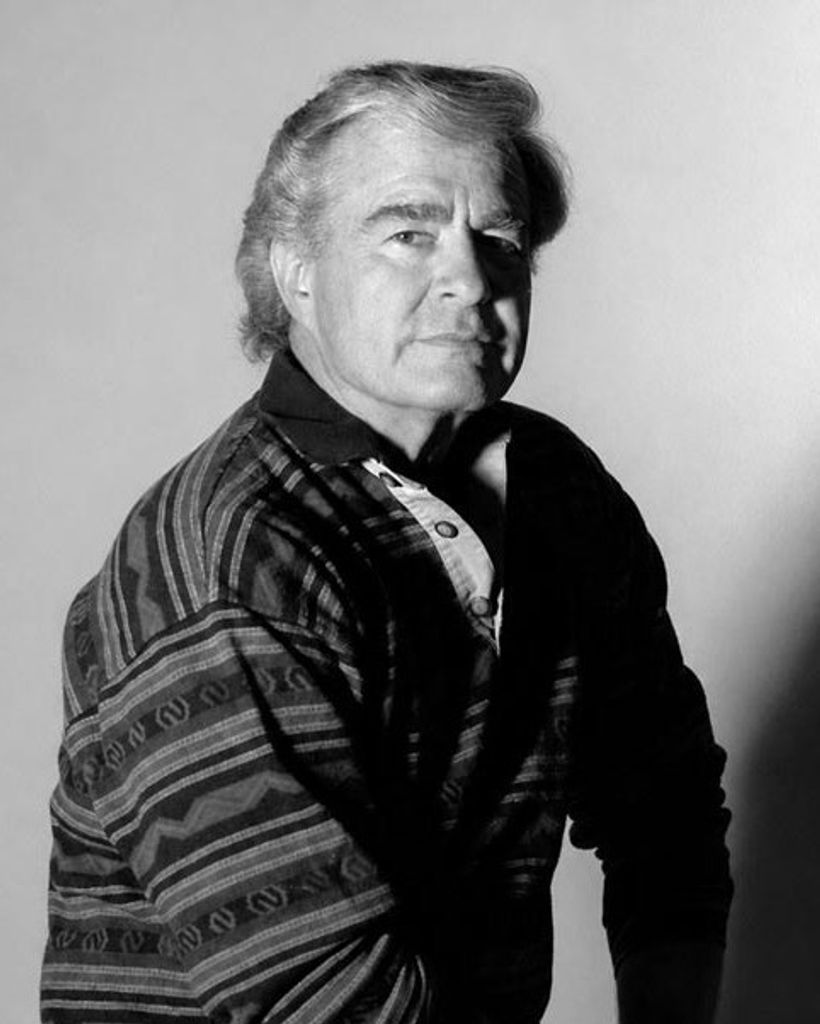


Burven Lee Bossie
Jun 17, 1930 — Aug 29, 2026
Plano, Texas
Burven (Burv) Lee Bossie, 96, was born on June 17, 1930, in Charleston, West Virginia, and passed away on August 29, 2026, in Plano, Texas. He is survived by his son Blair; daughter Brandi and wife Cretia; stepson Scott and wife Vicky; stepdaughters Kim, Kelli, and Kristi; and 8 grandchildren and 2 great-grandchildren. He was preceded in death by his wife of almost 60 years Barbara and son Barry.
Burv grew up in a small 600 sq. ft. house on the edge of Charleston. He had a normal “hillbilly” childhood: playing in the dirt, skipping rocks and fishing in the creek, hunting, making homemade slingshots, and shooting a BB gun. And for anything that hurt or made you sick, there was iodine and castor oil. While this period of his childhood was in the middle of the Great Depression, he didn’t remember his family ever lacking for anything. This was mainly due to the work ethic of his dad and mom, which they passed down to him, and he passed on to his children. He recalls his parents taking him up and down the West Virginia mountains and hollers to visit friends and family, and his dad even grabbing his fighting rooster and occasionally taking him to illicit cock fights. They also had a ferret they would take rabbit hunting - they’d guide the ferret down the rabbit hole, then grab the rabbit with their bare hands when it was chased out. He also attended a local church growing up and was baptized as a child.
Back in the hills of West Virginia, neighbors lived “down the road a fer piece” or “over that there hill a ways” or “up yonder in the holler” or “on the other side o’ the creek”. “Up and down the road” referenced which way the creek flowed, and taking a sack lunch to school was to “put it in a poke and take it down the road a piece”. One bit of hillbilly wisdom he referenced was “Never kick a fresh cow turd on a warm day”, words we would all do well to heed.
His first job in the summer after high school was loading box cars. WW2 was in full swing, and one day he saw a newspaper article where the military was offering education benefits for 1 year of active duty and 6 years in the reserves. He signed up for the Navy, wanting to serve on a small ship, and was then assigned aviation electronics training, which would have put him on an aircraft carrier. He finished that school just as his 1-year enlistment ended. Three years later, when the Korean War began, he was called back to active duty and spent 3 years teaching anti-submarine warfare to officers. He never got the chance to serve and sail on a ship.
Burv hitchhiked all over the Eastern US, as he did not own a car until his mid 20’s. He attended 7 different colleges and universities between 1949-2004, earning a degree in accounting and his master’s at age 50. This led to a career as a CPA (licensed in 4 different states) and as an internal auditor for a Big 8 firm, the Southland Corporation, Dallas Area Rapid Transit, and several other public and private companies. His hard work ethic and determination to find and solve accounting problems led to great successes. But there were also major disappointments, as many borderline and sometimes illegal practices he uncovered were brushed aside or buried by those in power who did not want that information to see the light of day.
While living in Virginia during the 70’s, Burv developed a love for anything to do with the Civil War. He bought a metal detector and spent many hours scouring the land around the house, finding dozens of lead balls from muskets, pearl buttons from uniforms, gold fillings from teeth, and even a bayonet. He treasured all these finds, and could spend hours talking about them and this period of history,
After he retired, he and Barbara traveled both the US and the world. They took several trips to Europe, the Mediterranean, and Russia, where his love of photography - especially black and white photos, since he was color blind - produced albums of pictures and memories they lovingly shared with their children and grandchildren. He also learned how to fly a small plane in the 80’s, though he was unable to get his pilot’s license due to being color blind.
Burv and Barbara both enrolled in different art classes at a couple of the local Texas community colleges. There he studied and mastered the arts of print making, ceramics, wet lab photography, digital photography, digital art, clay, sculpture, bronze casting, and painting. His very detailed black and white paintings won several 1st place awards at the college, and one of his professors even sponsored him in a one-man art show. He sold several of his paintings, gave away some to family and friends, and still has a bunch of them at the house.
Burv also loved music, developing an early love for both the big band sounds and jazz. He bought Barbara a baby grand piano on their 25th anniversary, and the house was always filled with a multitude of different genres of music. They loved going to see their favorite performers in concert (Frank Sinatra, Sammy Davis Jr., Elvis, Johnny Mathis, Ray Charles, and Neil Diamond, to name a few). They also had prime season tickets to the Dallas Summer Musicals for 20 years. Every year they would take their children and grandchildren to see some of the musicals, passing along their love of the performing arts.
Burv wrote an autobiography in his later years titled A Happy Kerfuffle, from which a lot of the previous information was gleaned. The conclusion page of this book is as follows:
“Somehow, I was blessed with effortless courage to attempt new things without fear of failure. Of course I failed, and was often just average, but I had some successes. Whenever I was uncomfortable or dissatisfied, I never hesitated to search for something better. Being curious, I realized that there were an endless number of things to explore in a changing world. It appears I have experienced more than two lifetimes of satisfying adventures and have enjoyed marinating in the memories. This attempt at writing was a journey that led to a better understanding of past events and the realization that I was very much like my dad, who never met a stranger. Being open-minded, trusting, and giving was a happy journey. Maybe old age and cognitive decline are not always synonymous.”
Guestbook
Visits: 4
This site is protected by reCAPTCHA and the
Google Privacy Policy and Terms of Service apply.
Service map data © OpenStreetMap contributors